atelier français · Paris Berlin Varsovie
Let’s talk

The art
of good judgment.

Three programs crafted to help you speak with greater impact,
master cultural codes and lead with legitimacy

Three programs.
Five workshops each.

Together, they form
the Signature Program.

Philippe Gruca at the Warsaw Negotiation Round, Belweder Palace, Warsaw.

The art of eloquence

Eloquence card: a hand holds a long sword.
01Forge decisive questions

Refine your questioning techniques and active listening: clarify requests, examine assumptions and move consequential business conversations forward.

By the end of the workshop, you will be able to

  • Distinguish facts, interpretations and assumptions in a business request.
  • Ask open questions and seek the details that deepen mutual understanding.
  • Reframe the issue and check with your counterpart that you have understood what matters.

In practiceExplore an unclear request through a structured conversation, then agree with your counterpart on the problem to address before proposing a solution.

02Hone words that ring true

Strengthen your rhetorical skills and powers of persuasion: structure a recommendation and choose arguments that matter to your audience.

By the end of the workshop, you will be able to

  • State a clear proposition, distinguish claims, arguments and evidence, and specify the decision you seek.
  • Prioritize arguments in light of your audience’s concerns and values.
  • Choose examples and analogies that illuminate your message without distorting its meaning.

In practicePresent the same recommendation to finance and operations leaders, adapting your arguments while keeping your message consistent.

03Shape fruitful agreementswithRational Games
Learn the foundations of principled negotiation with Rational Games: prepare alternatives, look beyond stated positions and build agreements that create value.

By the end of the workshop, you will be able to

  • Distinguish stated positions from underlying interests and prepare your best alternative to a negotiated agreement.
  • Explore options, use explicit criteria and assess concessions.
  • Clarify commitments and what implementation requires, then assess whether to reach an agreement.

In practiceNegotiate with asymmetric information, then review your preparation, the interests uncovered, possible trades and the strength of the resulting agreement.

04Parry objections with confidence

Handle objections and difficult conversations: examine arguments, clarify misunderstandings and defend or revise your position with sound judgment.

By the end of the workshop, you will be able to

  • Distinguish substantive objections, misunderstandings and personal attacks.
  • Recognize false dilemmas and shifts in meaning, then restate the objection accurately.
  • Choose a proportionate response and make any remaining disagreement explicit.

In practiceDefend a proposal against different kinds of objections; identify each difficulty before choosing to rebut, clarify, concede a point or revise your position.

05Master the art of eloquence

Bring public speaking, executive communication and storytelling together: explain a strategic direction, show what is at stake and build shared commitment to a project.

By the end of the workshop, you will be able to

  • Build a clear thread connecting context, challenges, choices and future direction.
  • Show what is at stake through stories grounded in facts, relevant imagery and examples.
  • Acknowledge the effort required and remaining uncertainties, then explain the next step.

In practicePrepare a five-minute address introducing a real strategic direction; ask listeners to explain what they understood, remembered and identified as the next step.


Explore this program · The art of eloquence

Intercultural intelligence

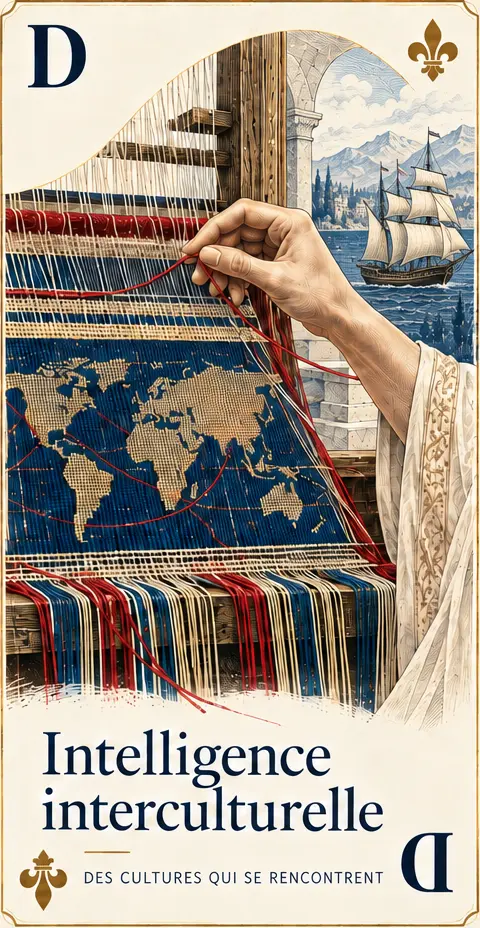
Intercultural card: a sailing ship and a woven world map.
01Cross invisible borders

Explore intercultural awareness by examining your own reference points: respect, efficiency and professionalism do not mean the same thing in every setting.

By the end of the workshop, you will be able to

  • Identify your own cultural norms and assumptions in a professional relationship.
  • Distinguish the influence of national culture, organization, profession and context.
  • Develop and test alternative explanations before making a judgment.

In practiceRevisit a workplace incident from several perspectives, separating observable facts from the intentions attributed to each person.

02Decipher unspoken codes

Explore the eight dimensions of Erin Meyer’s Culture Map to adapt cross-cultural communication, feedback and expectations about how decisions are made.

By the end of the workshop, you will be able to

  • Use Erin Meyer’s eight dimensions as reference points to test against the situation.
  • Recognize differences in communication, persuasion, leadership, decision-making, trust, disagreement, feedback and scheduling.
  • Adapt your approach without reducing colleagues to cultural stereotypes.

In practiceMap differences in working practices within an international project, then replay an ambiguous exchange while clarifying each person’s expectations.

03Forge decisive allianceswithRational Games

Practice multilateral negotiation with Rational Games through business or diplomatic simulations, exploring interests, mandates, coalitions and cultural differences.

By the end of the workshop, you will be able to

  • Map the interests, mandates and decision rules of the different parties.
  • Balance coalition-building with dialogue across the table while respecting your mandate.
  • Build commitments understood by all parties and check what implementation requires.

In practiceTake part in a multi-party simulation, alternate bilateral discussions with plenary sessions, then examine how coalitions formed and what made an agreement possible.

04Weave lasting trust

Use dialogue and intercultural mediation to resolve misunderstandings, address conflict and rebuild a working relationship that allows for candid exchange.

By the end of the workshop, you will be able to

  • Distinguish intention, impact and the need for recognition in a disagreement.
  • Guide a conversation in which each person can explain how they see the situation.
  • Agree on practical steps to repair the relationship and rebuild trust.

In practiceRevisit an exchange in which being corrected in front of others felt humiliating: hear both accounts, clarify the impact and agree on how to work together again.

05Bridge distant worlds

Translate cultural and professional differences into explicit working agreements, building shared meanings for autonomy, transparency and responsibility.

By the end of the workshop, you will be able to

  • Recognize when apparently shared terms carry different meanings.
  • Clarify decision authority, consultation, information-sharing and how disagreements are addressed.
  • Develop shared working rules and adapt them to real project constraints.

In practiceDraft a one-page working agreement for an international project, then test it against an urgent request, an absent decision-maker or conflicting instructions from headquarters.

Explore this program · Intercultural intelligence

Ethical leadership

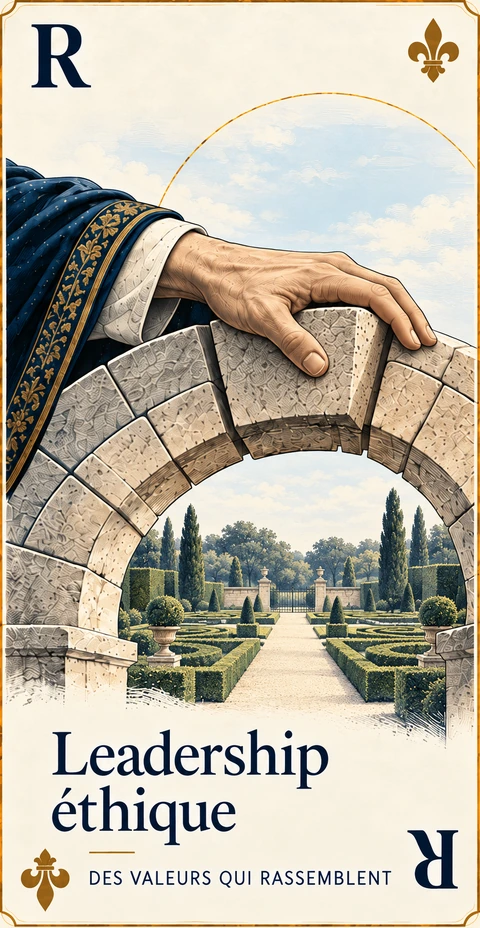
Leadership card: a hand sets the keystone of an arch opening onto a French formal garden.
01Lay the foundations for sound judgment

Strengthen decision-making by examining cognitive biases, ethical criteria and the consequences of your choices for those affected.

By the end of the workshop, you will be able to

  • Distinguish facts, assumptions and values, and identify biases that shape your judgment.
  • Weigh consequences, obligations and fairness when making a decision.
  • Justify a difficult choice and identify the information that could lead you to revise it.

In practiceAllocate a limited budget between supporting a struggling business unit and investing in transformation; explain your criteria, then reconsider the decision as new information emerges.

02Anchor legitimate authority

Exercise authority grounded in judgment, fairness and trust: take responsibility for a decision while remaining open to information that challenges it.

By the end of the workshop, you will be able to

  • Distinguish the roles of status, expertise, example and trust in your authority.
  • Hear a challenge and acknowledge an error without avoiding responsibility.
  • Explain a decision, its limits and the room others have to exercise initiative.

In practicePresent a contested reorganization; hear objections that reveal new information, then explain what you will maintain, what you will change and why.

03Counter unfair tacticswithRational Games

Respond to dirty tricks in negotiation with Rational Games and the professional actors from Rational Games Players: intimidation, manufactured urgency, guilt-tripping and attempts to unsettle you.

By the end of the workshop, you will be able to

  • Recognize an unfair tactic and distinguish it from firm disagreement.
  • Question pressure, name a tactic and set a boundary without resorting to manipulation.
  • Decide when to verify, continue, pause or leave while protecting your interests and principles.

In practiceFace a scenario played by a professional actor, pause to analyze it, then replay it with different responses and feedback from the actor.

04Build a responsible team

Develop ethical leadership practices that make it possible to raise concerns, acknowledge mistakes and challenge assumptions, with clear responsibility for each decision.

By the end of the workshop, you will be able to

  • Bring relevant information and objections into the discussion, including challenges to the leader.
  • Guide deliberation that examines criteria, consequences and minority perspectives.
  • Specify who decides, who acts and who reviews the effects, without allowing responsibility to become blurred.

In practiceJoin a committee under pressure: participants hold different information and a colleague whose voice is often overlooked knows of a critical risk. Deliberate, examine what went unsaid, then replay the decision with better ground rules.

05Pass on a living legacy

Prepare delegation and succession by making explicit the principles and reasoning that enable others to exercise their own judgment.

By the end of the workshop, you will be able to

  • Distinguish principles worth preserving from habits that can change.
  • Pass on the reasoning behind your choices and the tacit knowledge needed to act.
  • Define autonomy and review points that enable others to take responsibility.

In practicePrepare a real handover, then give your successor an unfamiliar dilemma to resolve without consulting you; assess what was passed on beyond instructions.

Explore this program · Ethical leadership
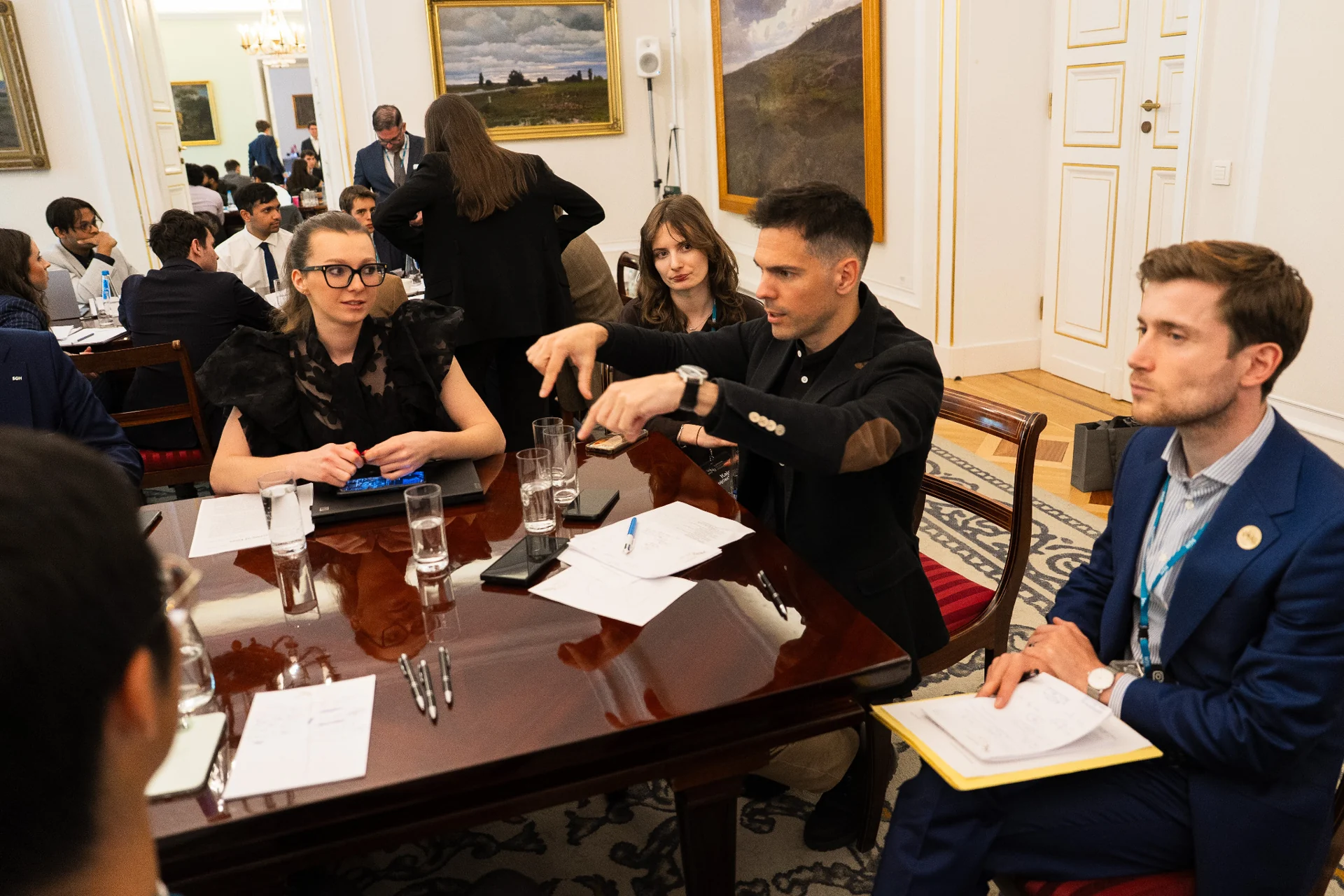
A small group taking part in a workshop around a table.

Your program.
Tailored to you.

The Signature Program brings together all fifteen workshops.

You can also compose your own, choosing those that speak to your priorities.

Together, we shape its guiding thread, pace and practical exercises.

Each reflects a French tradition of craftsmanship: precision in language, discernment and attention to detail.

From thought
to action.

Philosophy is the starting point of Philippe Gruca’s work: questioning assumptions, clarifying language and informing decisions. At atelier français, this discipline takes shape through three arts: rhetoric, communication and ethics.

Through his collaboration with Rational Games, he teaches negotiation through games and simulations. In-depth debriefs connect rigorous thinking with each participant’s decisions, relationships and responsibilities. Every year, he serves as an expert and judge at the Warsaw Negotiation Round.

He has taught at IÉSEG, Sigmund Freud University in Paris, the Institut français in Berlin, TU Berlin and SGH Warsaw School of Economics. He is also editor-in-chief of Inter-Nord. With French and Polish roots, he works in four languages: French, English, German and Polish.

Seated portrait of Philippe Gruca, founder of atelier français.

Teaching & jury roles

Selected clients

Philippe Gruca in a workshop, using both hands to illustrate his point.